Commercial cleaning and food hygiene professionals in Brampton support restaurants, food centers, bakeries, warehouses, and food service operations maintaining standards. They sanitize regularly touched surfaces, food contact areas, equipment, floors, drains, restrooms, and prep zones with approved chemicals, maintaining proper ratios, and recording exposure duration. You need scheduled cleaning based on hazard level, volume, food allergies, and inspections, along with documented proof that support Hazard Analysis Critical Control Points, audits, and public health compliance. The following information explains what strong sanitation programs must contain.
Main Points
- Sanitation professionals from Brampton support restaurants, grocery departments, commissaries, warehouses, bakeries, schools, mobile vendors, and allergen-sensitive operations.
- Cross-contamination avoidance is maintained by treating frequently contacted areas, food-contact equipment, kitchens, floors, drains, restrooms, and storage areas with sectional methods.
- Proper chemical concentration, alignment, and contact time are verified by qualified contractors, with completion logged via tests, assessments, and correction logs.
- Risk, output capacity, switches, accidents, and guidelines ought to guide sanitation schedules, with regular, regular, and cyclical activities assigned by section.
- Choose providers with hazard analysis knowledge, sanitation, understanding, WHMIS, preparation, coverage, endorsements, coded tools, and compliance-ready cleaning documentation.
Food Safety Cleaning Requirements for Brampton Facilities
You must follow food safety cleaning if your establishment is covered by health inspections, food codes, or HACCP protocols. This covers food venues, break rooms, food centers, supermarket areas, butcheries, seafood displays, shops, and commercial food prep.
Adherent hygiene cleaning is additionally needed in distribution centers, processing facilities, refrigerated storage, commercial bakeries, school meal programs, event venues, and delivery services. Temporary and mobile businesses apply similarly, including food trucks, event vendors, and temporary stalls. Your establishment demands written cleaning standards should your workers process ingredients, portion ready-to-eat items, reheat products, or store allergens. In Brampton, hygiene continues to be not voluntary; it represents statutory, functional, and public health standards.
Which Areas Do Brampton Cleaning Experts Cover?
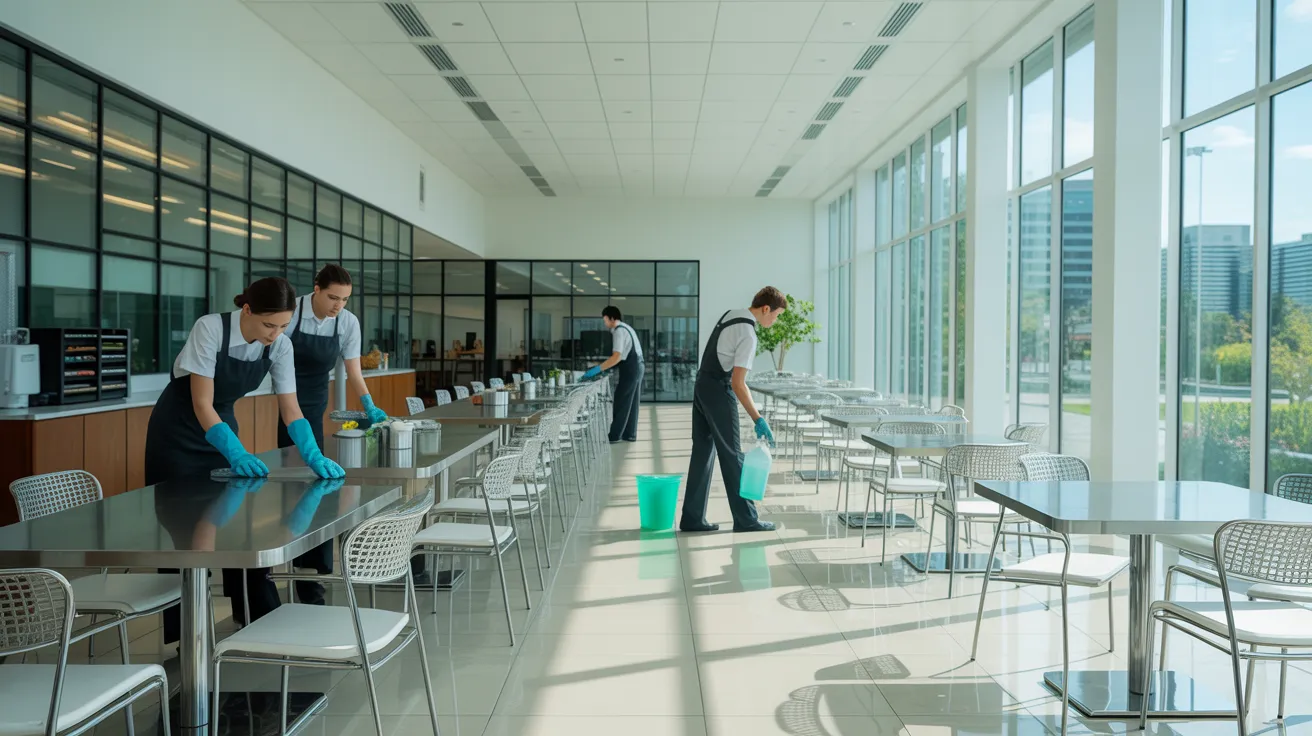
You need skilled cleaning experts who sanitize frequently touched areas, kitchen spaces, floor areas, and restroom facilities to ensure compliance with food safety and health standards. These locations are prioritized due to their high cross-contamination potential, falling hazards, and health code violations.
Understanding their cleaning procedures allows you to confirm your operation's sanitation satisfies required standards and regulations.
Cleaning High-Touch Zones
create a sanitizing protocol
company specifications and relevant health codes to sustain desired results. Staff can employ surface swabbing to check sterilization efficacy
Food Prep Areas, Flooring, and Sanitary Facilities
Brampton cleaning professionals will handle kitchens, floors, and restrooms since each space presents different hygiene concerns, injury, and community health challenges. In industrial kitchens, you need degreasing on cook lines, equipment exteriors, drains, prep surfaces, and splash zones to reduce bacterial growth and pest activity.
Professional floor upkeep with documentation is also included. is likewise provided as part of the service.
Restroom cleaning involves disinfecting touchpoints, fixtures, partitions, dispensers, and waste containers, replenishing amenities and managing odor. They also maintain restaurant cleaning supply rooms where product storage, sink cleanliness, and drain systems impact daily sanitation standards and worker protection.
How Food Safety Cleaning Benefits Brampton Operations
Brampton operations demand food-safe cleaning standards to fulfill health code requirements and pass audits. You also reduce bacterial spread through proper cleaning of food-preparation surfaces, appliances, and frequently-touched items. Most importantly, you help protect community wellness by reducing the chance of food poisoning in your establishment.
Regulatory Code Requirements
Brampton food businesses must comply with mandatory safety protocols, so sanitation practices https://mwaccommercialsanitation.ca/ is critical to satisfying health codes, protecting customers, and eliminating penalties. You must maintain sanitized food contact points, recorded sanitation plans, safe chemical management, and verifiable staff procedures that meet municipal and provincial inspection expectations.
Thorough sanitation measures enables allergen management by minimizing residue on common tools plus high-touch areas. If your cleaning standards decline, you encounter violations, remedial directives, reputational damage, and operational interruptions during follow-up inspections or enforcement actions.
Contamination Control
Adhering to regulatory guidelines requires your expertise in stopping cross-contamination throughout routine preparation and sanitation work. You need to isolate uncooked items from finished products, sanitize work stations after each task, and store cleaning supplies separately from food. Structured procedures reduce transfer risks and ensure consistent compliance during inspections.
You might establish allergen separation to prevent priority allergens from contacting common areas, containers, or machinery. Apply separate boards, color-marked equipment, and rigorous tool identification so staff don't mix items during preparation or service. Enforce washing hands following raw meat, seafood, eggs, or allergen-containing products. Change wiping cloths regularly, and test disinfectant concentration using strips. When you train staff to follow these controls each shift, you develop a more sanitary, secure business that matches Brampton's safety requirements every day.
Public Wellness Protection
When food safety cleaning breaks down, you don't just face inspection failure—you increase the chance of food-related sickness impacting customers, staff, and the wider Brampton community. You also weaken your role in safeguarding community wellness, especially in busy food facilities where pathogens travel quickly through surfaces, equipment, and touchpoints.
You need cleaning protocols that remove soils, sanitize correctly, and confirm effectiveness. That requires adhering to exposure periods, employing authorized sanitizers, documenting schedules, and educating employees to meet health-unit expectations. These measures facilitate disease prevention by lowering microbial loads before they reach food or hands. In Brampton, strong sanitation shields at-risk groups, prevents disease spread, and enables you to show proper care. When you clean to standard, you exceed basic requirements—you substantially decrease danger and promote secure food handling citywide.
How Can Cleaning Practices Ensure Food Safety Compliance?
Establishing comprehensive cleaning schedules enhances food safety compliance by lowering contamination exposure, limiting pathogen development, and ensuring your facility complies with sanitation requirements under HACCP-based programs and public health regulations. You ensure that food-handling surfaces are visibly clean and microbiologically controlled, facilitating documented preventive controls and inspection readiness.
Cleaning strategies additionally amplify allergen mitigation by removing residues that can lead to undeclared allergen exposure.
When Should You Schedule Commercial Cleaning?
food-contact surfaces, bathrooms, and high-contact areas
Establish every week or monthly maintenance on drains, vents, storage racks, and hard-to-reach equipment zones, based on inspection data and sanitation documentation. Reserve seasonal deep cleaning to cover shutdowns, weather-related soil buildup, or pest-pressure periods
What Should You Look For in Brampton Cleaning Experts?
Evaluate providers first by sanitation compliance standards rather than price alone. You must ensure each provider understands CFIA, public health, and HACCP requirements for your business. Request insurance proof, WHMIS compliance, staff training documentation, and supervision methods. Check technician awareness of cross-contamination risks, chemical handling, and traceable sanitation records.
You must also evaluate business consistency and accountability. Seek references from food facilities in Brampton, then assess response times, corrective processes, and communication quality. Ensure the company enables supplier checks and can provide inspection-compliant records when authorities or third parties demand verification. Verify equipment care, color-coded items are deployed correctly, and site-specific hazards are understood. A reputable service safeguards compliance, product integrity, and your market standing.
What's covered in a sanitation cleaning strategy?
Develop a written strategy that makes clear every sanitation task, standard, and responsibility prior to production start. You should detail cleaning schedules, authorized chemicals, concentration levels, contact duration, implements, and validation techniques for each zone, surface, and piece of equipment. Include pre-operational inspections, corrective actions, and employee training requirements.
Your plan should also address contamination prevention controls, waste handling procedures, pest management measures, and written schedules for rest areas, drains, flooring, and food-contact surfaces. Describe how you'll separate raw and ready-to-eat processes, facilitate ingredient tracking, and ensure accurate allergen labeling through validated cleaning between product changes. You should assign accountability, maintain signed records, and review results against regulatory standards, HACCP controls, and customer requirements. When gaps appear, modify procedures immediately and instruct staff.
Frequently Asked Questions
Are cleaning services available for overnight shifts in Brampton facilities?
Yes, you can arrange cleaning services to accommodate nighttime operations in Brampton facilities. You'll organize overnight sanitation around operational windows, security protocols, and staffing levels. Services typically establish overnight logistics to reduce interruption, maintain standards, and track completed work. You should verify response times, supervision, access procedures, and disposal procedures before starting service.
Can sanitation professionals handle emergency spill response?
Yes, you can find many Brampton cleaning experts who offer emergency spill response solutions. They handle contamination, assess risks, contain contamination, and begin swift cleanup to reduce exposure and prevent business interruption. You should verify arrival timeframes, professional credentials, PPE protocols, and disposal procedures. If your facility must comply with industry standards, select a service that records events, maintains regulatory procedures, and enables compliance verification.
Are eco-friendly disinfectants safe for food-handling equipment?
Definitely, green disinfectants operate safely on surfaces contacting food if you source items marked food-safe that satisfy compliance requirements. You ought to validate contact times, dilution ratios, and rinse requirements ahead of deployment. Plant based formulas decrease chemical hazards, but you need evidence of effectiveness against specific pathogens. To preserve residue-free areas, follow manufacturer instructions exactly and ensure your cleaning agent adheres to relevant food safety standards.
Will cleaning schedules respond to seasonal shifts?
Certainly, maintenance plans respond to seasonal shifts effectively. Adjust timing, staffing, chemicals, and validation steps to fit with production rhythms while maintaining regulatory compliance. Reduce production interruptions via planning disinfection around production shifts, high demand periods, and operational patterns. Concurrently update procedural documents, instruction programs, and environmental monitoring to capture seasonal hazards, emerging allergens, or higher contamination levels. Regular reviews ensure the plan effective.
Do commercial cleaning providers coach staff members in sanitation best practices?
Yes, professional cleaning services often train your team on sanitation best practices. You receive staff training on proper chemical use, exposure periods, contamination control, equipment disassembly, and record keeping. They typically align training with HACCP, GMP, and CFIA or regional health department regulations. Many perform hygiene inspections to confirm adherence, identify gaps, and strengthen remedial steps. This allows you to sustain uniform processes, succeed in audits, and minimize contamination hazards daily.
Closing Remarks
Partnering with Brampton commercial cleaning and food safety professionals means more than cleaning—it guarantees your operation stays inspection-compliant and your standards remain compliant. From kitchen areas to production zones, each cleaned area and organized section reduces health hazards and avoids costly disruptions. By arranging service at suitable frequencies and executing a comprehensive cleaning strategy, you protect your workforce, your customers, and your image. In a tightly controlled market, clean environments are non-negotiable—they're critical to business success.